Start with the outfit as a whole
You do not need lipstick the exact colour of your dress. A useful question is simpler: what connection would make the clothes and makeup feel like one decision? It might be a repeated rose tone, a different colour that stands apart, or a restrained makeup look beside an expressive outfit.
There is no single correct pairing for a dress colour. L’Oréal Paris’s guide to makeup and dress colours, for example, offers both lip-focused and eye-focused ideas for a black outfit. Its examples are brand styling suggestions, not proof that any one palette suits everyone. The framework here is Elsa’s editorial approach to making your own choice with the makeup you already have.
Outfit colour + one makeup decision + a check in the mirror with the neckline visible.
Three routes, three different moods
1. Echo a colour
Choose one colour family from the clothing or an accessory and repeat it in a small makeup detail. A rose top could suggest a rose lip. The two do not have to be identical: a sheer version can make a gentler connection than an opaque match. Leave the rest of your makeup as familiar as you like while you judge that single addition.
2. Create a contrast
Choose a makeup feature that stands apart from the outfit. With quiet black or cream clothing, a stronger lip is one place to experiment. Contrast can also mean a change in depth or finish rather than a completely different hue. Try a deeper lip with a pale neckline, or a restrained matte eye with shiny fabric. These are creative options, not colour-analysis rules.
3. Keep the connection quiet
If your outfit already has a bold print, sculptural shape or several colours, you might prefer familiar, understated makeup. The connection can be mood rather than a repeated pigment. Choose the makeup that leaves you happy with the whole look; “quiet” does not mean bare skin or a prescribed amount of coverage.
Try the framework with Elsa’s outfit edits
| Outfit | First idea | Alternative |
|---|---|---|
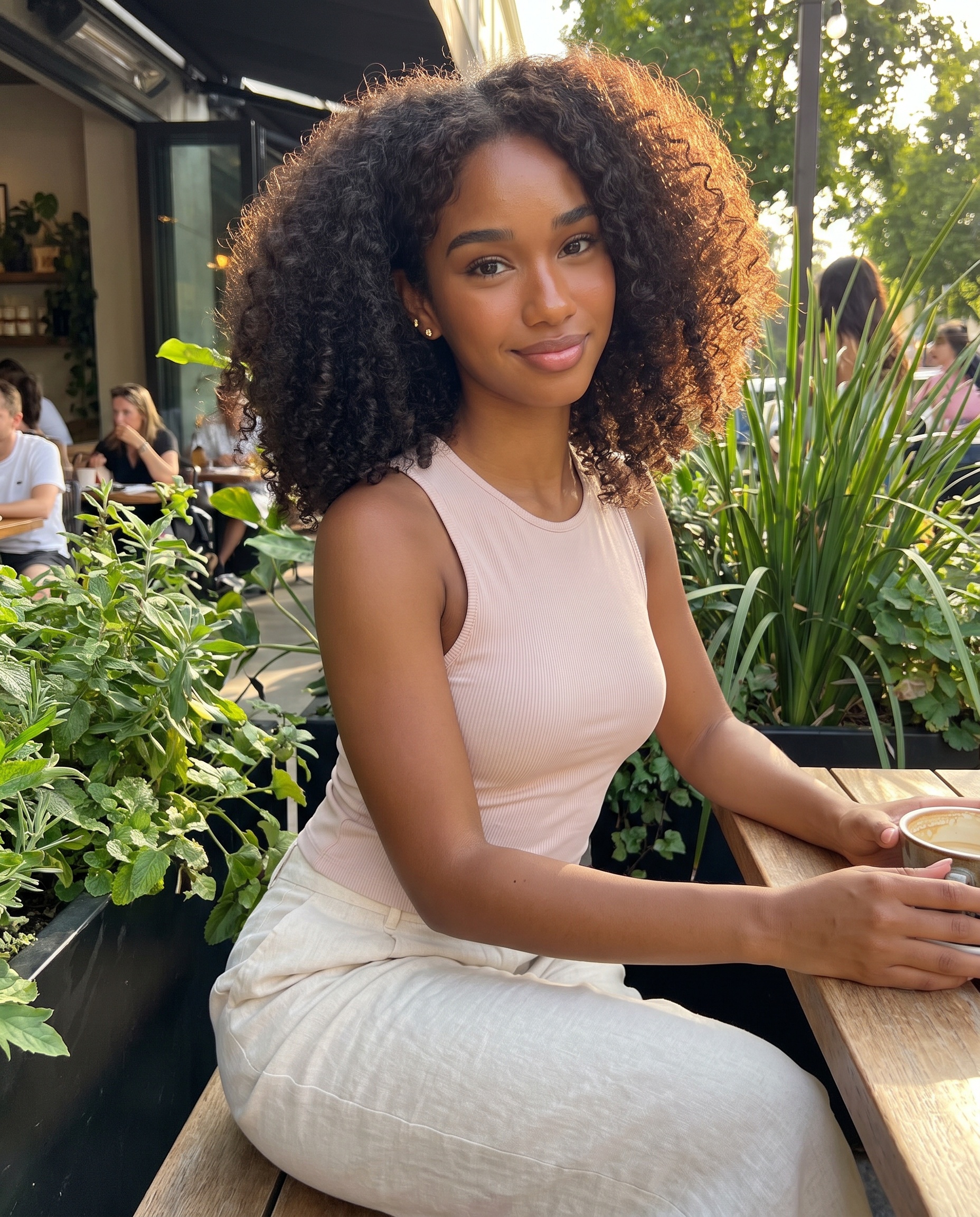
| Blush + cream | Echo the pink family in a soft rose lip. | Keep lip colour familiar and put the accent on cheeks. |
| Burgundy evening dress | Try a sheer berry lip as a tonal link. | Leave the lip quieter and define the eyes. |
| Ivory blazer + black | Use a deeper lip to continue the light–dark contrast. | Keep colour restrained and make the liner shape the detail. |
The existing blush-and-cream outfit, burgundy dress and ivory blazer edits are outfit references. Their AI imagery does not demonstrate the application or real-world wear of any makeup product.
A short getting-ready sequence
- Put the neckline in view. Wear the top, or hold it near your face, so you are judging the actual combination rather than remembering its colour.
- Name your route. Say “echo,” “contrast” or “quiet.” This gives you a useful stopping point when you are tempted to keep adding details.
- Choose the first feature. Start with lips, cheeks or eyes. Keeping one feature as your initial focus makes comparison easier; you can still choose a bolder all-over look.
- Try a small change. Use a familiar product and adjust its intensity. You do not need a new purchase for every outfit.
- Check the complete look. Add your chosen earrings or glasses before making the final decision. If the result feels busy, remove or soften one detail and compare again.
What if the shades do not seem to work together?
Describe the specific problem before changing everything. Is the lip much brighter than you wanted? Is a very pale colour disappearing against the rest of the look? Are you simply in the mood for a different effect? Try one adjustment to intensity, depth or placement, then check again.
Do not choose foundation to match a dress: outfit coordination is a colour-styling exercise, not a reason to change your complexion shade. A lipstick name, a screen swatch or Elsa’s AI portrait also cannot establish your shade match. Judge the actual product on yourself in the lighting where you will wear the look.
Keep the decision repeatable
Save a short formula, such as “cream neckline, berry lip, restrained eyes,” alongside a photo if useful. Next time you wear that outfit, you can repeat the relationship while changing the occasion or finish. The goal is a flexible idea you understand, not a shopping list or a rule that limits which colours you can wear.
Sources & editorial approach
Reviewed 28 September 2026. Brand tutorials inform technique; styling comparisons are original editorial suggestions. Source links are not affiliate links or endorsements.